What this is
This site publishes the working documents of an independent evidence programme concerning a single stretch of the tidal and freshwater Thames. It is not a campaign site and it does not ask you to accept a conclusion.
The purpose is narrow and practical: to assemble what is actually known about this reach of the river from official monitoring, published datasets and public records; to identify clearly where that evidence is thin, contested or absent; and to set out proportionate asks of the bodies that hold statutory responsibility for it. The material below is organised into two zones — the evidence base itself, and why it matters in the wider national picture. Everything is versioned, dated, and revised as new information is obtained.

- Sourced. Figures and claims are referenced to the dataset, publication or public record they came from, with a provenance tag.
- Provisional. Material is published at working-draft stage and marked with its version and date, not held back until it is final.
- Corrigible. Where a body identifies an error in this evidence, the correction is made and recorded.
Programme status
What has been published, what is being worked on, and what is still waiting on somebody else. A programme that asks bodies to be transparent about their evidence should be transparent about its own.
- Published Evidence pages Ten pages published, each sourced and provenance-tagged.
- Published Published corrections Two corrections published in full, each with the figure that was wrong, why, and who caught it.
- Published Water-body geography Resolved 31 Aug 2026 — the reach spans two water bodies, split at Teddington Weir.
- In progress Cross-correlations One interactive page live; the remaining correlations are being built and will state their own limits.
- Published Invertebrates & the brackish transition Updated 14 Oct 2026. Ham and Teddington now carry EA-generated BMWP and ASPT, from a BIOSYS extract the EA supplied on request. Station names confirmed by the EA. One correction published (station distance).
- Not started Repeatable data pipeline Pages are currently built by hand. A generator that rebuilds them from the datastore is the next structural piece.
- Not started Weekly news monitor The 88-item news catalogue is published; automated weekly refresh is not yet running.
- Not started Automated collection API sources collect cleanly. Two browser-based sources still need tuning against the live pages.
- Awaiting a body Information requests EIR2026/31287 with the Environment Agency — 44 working days elapsed, beyond the 40-working-day maximum, no extension notice received.
Status as at . This board is maintained alongside the work rather than written up afterwards; where something is not started, it says so.
Where the evidence comes from
Every figure on this site traces back to one of these bodies. Most of it is published open data; some has been obtained by information request; some was provided directly, and is credited where it appears.
-
Environment Agency
Water Quality Archive, Catchment Data Explorer, Ecology & Fish Data Explorer, EDM returns, bathing water. Open Government Licence v3.0. Also a BIOSYS invertebrate extract of 13 October 2026, supplied on request by M. Davison (Open Government Licence).
-
Defra
Bathing-water designation and sewage-treatment policy.
-
Ofwat
Penalties, dividend and bonus determinations.
-
Thames Water
Storm-discharge and EDM reporting for Mogden and the reach.
-
Port of London Authority
Governance of the tidal foreshore below Teddington.
-
ZSL
State of the Thames; eel, smelt and invertebrate records.
-
BTO / WeBS
Wetland Bird Survey counts and trends.
-
NBN Atlas
Aggregated species occurrence records; per-record licences.
-
GiGL
Greenspace Information for Greater London — SINC and habitat records.
The marks above are our own. They are drawn for this site and are not the official logos, emblems or crests of the organisations named. The Open Government Licence under which most of this data is published specifically excludes departmental and public sector logos and crests, and no endorsement, affiliation or approval by any of these bodies is implied or claimed. Listing an organisation here means only that this programme uses evidence it holds or publishes.
Zone 1 · The evidence base
Evidence
Ten self-contained evidence pages, each built directly from primary data and every figure tagged with its provenance — RAW-PULL (data we downloaded and parsed), PUBLISHED (quoted from an official source), DERIVED (our inference from a stated rule) or ACCESS-BLOCKED (public in a browser but unreachable by automation). Read, cite and share them freely.
-
Evidence
Water quality
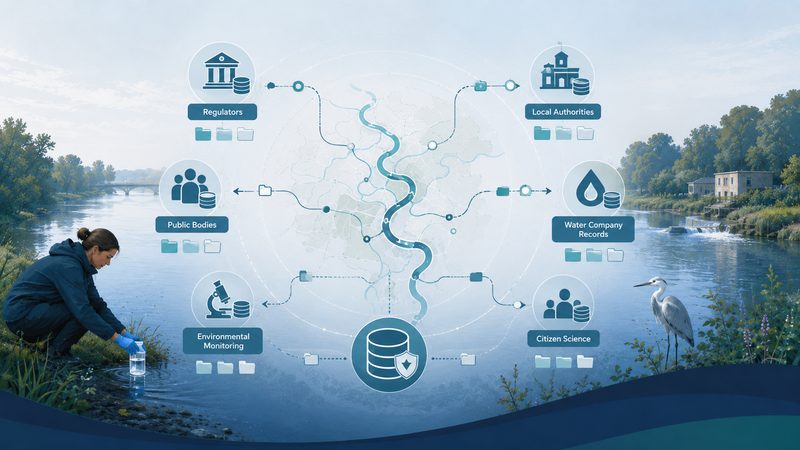
Dissolved oxygen, ammonia, phosphate, nutrients and temperature at Teddington Weir (freshwater) and Richmond (tidal) — 2,432 observations from the EA Water Quality Archive. Oxygenated but eutrophic above the weir; fish-stress oxygen sags below Mogden.
Working page · RAW-PULLOpen →
-
Evidence

Sewage & storm overflows
Mogden sewage works (permit CNTD.0085): storm-tank discharge hours and counted spills to the tidal Thames, 2020–2025. 2024 was the worst year on record — 471.7 hours across 50 spills. Duration only; no volume is published anywhere.
Working page · RAW-PULLOpen →
-
Evidence
WFD status & compliance
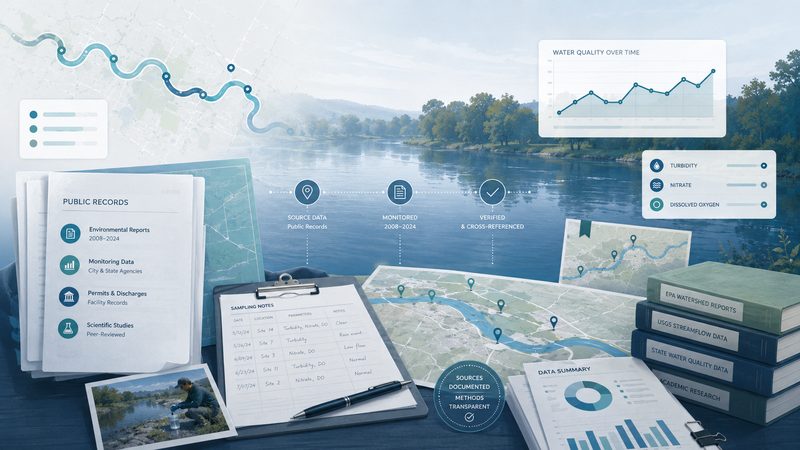
Water Framework Directive classifications for the river and tidal bodies: below "good" for three cycles, sewage discharge named as a reason on both, and the chemical objective relaxed to 2063 citing "disproportionate burdens".
Working page · RAW-PULLOpen →
-
Evidence

Fish & aquatic ecology
A 37-year seine-net series from Teddington to Battersea: European eel down 92% in catch per haul between the 1990s and 2005–18, then a partial and unsettled recovery since 2019. Corrected 31 August 2026, with an honest audit of what the evidence can and cannot support.
Working page · RAW-PULLOpen →
-
Evidence
Invertebrates & the brackish transition
Ham and Teddington, two EA stations in the same tidal water body worked with the same net. The public download scores only Teddington. The EA has now generated BMWP and ASPT for 105 Ham samples from 2006 to 2026, charted here with the method boundary and the salinity caveat stated.
Updated 14 Oct 2026 · RAW-PULLOpen →
-
Evidence

Birds & biodiversity
142,070 NBN Atlas records: 19,469 waterbird records across 23 species, indicator species (eel, smelt, quagga mussel) and the effort-versus-population caveat that means these counts are context, not proof of cause.
Working page · RAW-PULLOpen →
-
Evidence

Bathing water
England's first designated river bathing water at Ham & Kingston (designated 15 May 2026): the E. coli and intestinal enterococci samples now coming in, and why no formal "safe to swim" classification is due until about 2029.
Working page · PUBLISHEDOpen →
-
Evidence
Accountability & context
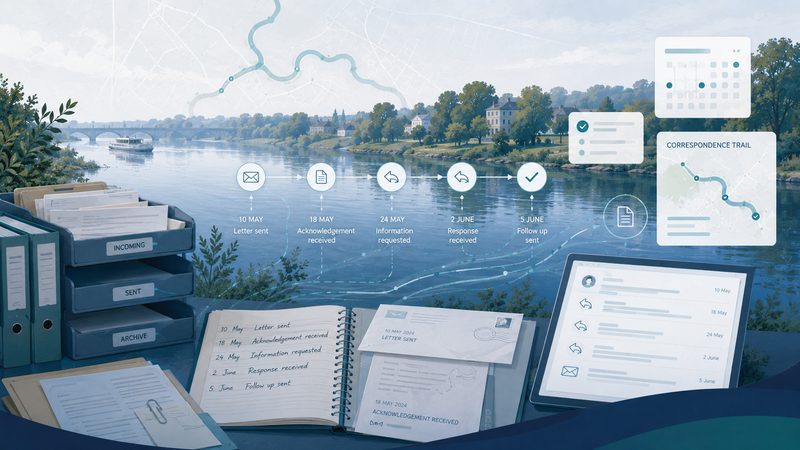
The regulatory record: Ofwat's record £122.7m penalty (May 2025), 523 pollution incidents and a bottom 1-star rating in 2024, and ZSL's long-term State of the Thames temperature and oxygen trends. Fines proven; charges kept distinct from convictions.
Working page · PUBLISHEDOpen →
-
Evidence

Who owns Thames Water — and who actually decides
The six-company chain traced at Companies House, the board named from filings, the contested 2026 restructuring stated with dates — and the decision route for the Teddington abstraction: no vote anywhere, a Secretary of State decision, and a 2027 registration window that is the public’s only formal way in.
Working page · RAW-PULLOpen →
-
Interactive

Cross-correlations
The interactive flagship: where the strands meet — storm spills, dissolved oxygen, season and ecology — shown together, with correlation held carefully apart from causation and every asserted link flagged as such.
Interactive · mixed provenanceOpen →


Zone 2 · The wider picture
Why it matters / In the news
The reach does not sit in isolation. A five-year sweep of 88 catalogued news items — from Thames Water's finances and record penalties to the Water (Special Measures) Act 2025 and the local Teddington abstraction saga — sets out why this evidence matters and what is at stake for the river and the people who use it. Legal status is stated with care: "charged" and "alleged" are never presented as "convicted"; regulatory fines are kept distinct from criminal convictions.
-
News
Why it matters / In the news
The national and local context in one place: the biggest stories of the last five years, the regulatory reforms now under way, and how the Teddington-to-Richmond reach fits the wider story of water in England.
Awareness zone · 88 sourced itemsOpen →